

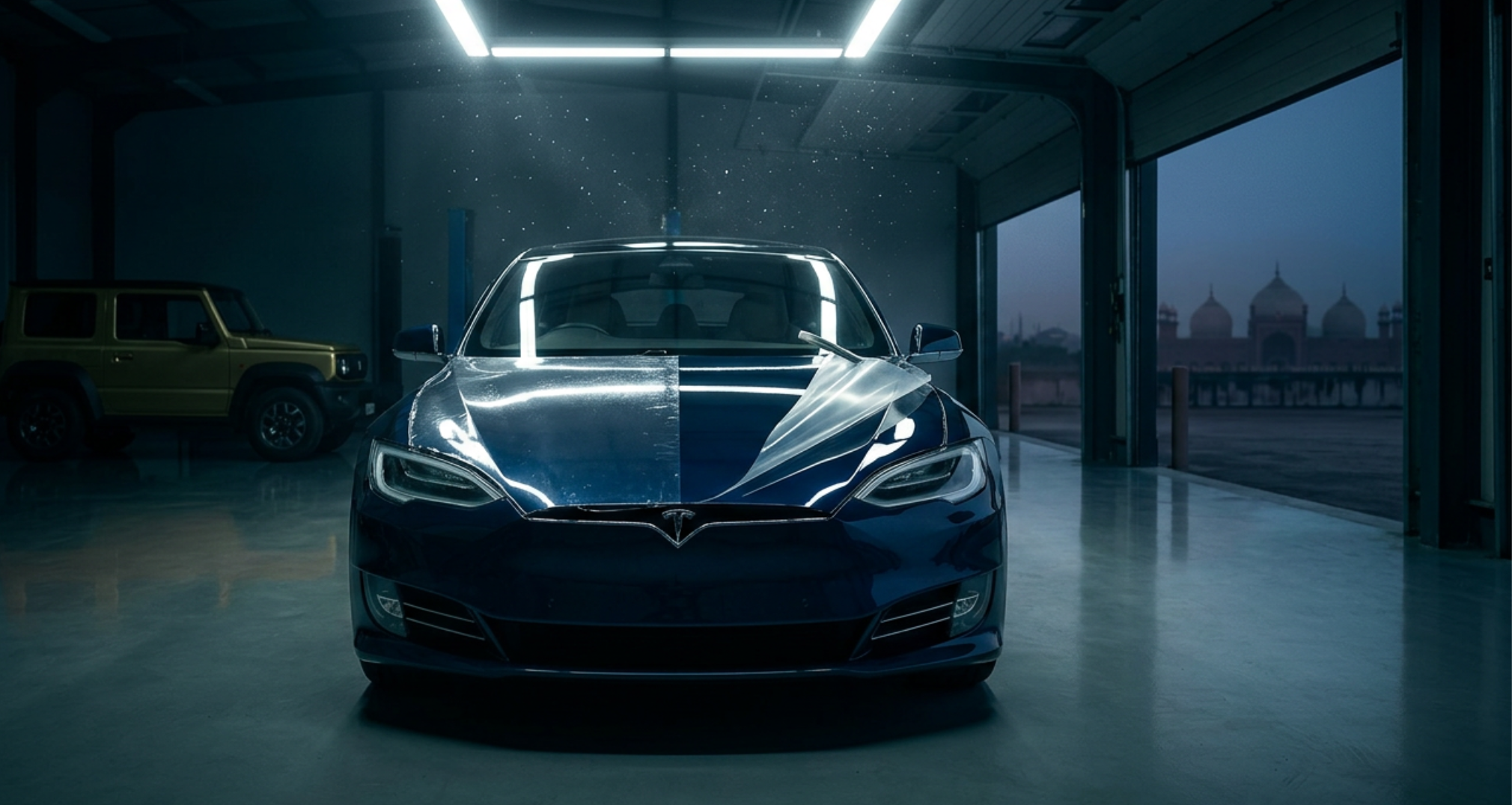
Paint protection film is a clear layer of film bonded to your car’s paint to take the stone chips, scratches and grime that Lahore roads throw at it. The film itself is only half the job. A good PPF installation in Lahore depends just as much on what happens before the film goes on and after the car goes home: the consultation, the paint preparation, the room it is fitted in, how the edges are finished, and the care plan you leave with.
This guide walks through a proper installation step by step, so you know what the service should include and what to ask before you pay. If you are still choosing between studios, our checklist for choosing a PPF studio in Lahore covers the nine checks to run first. Here we focus on the work itself.
Step 1: A Consultation and the Right Film for Your Car
Every proper installation starts with a conversation and an inspection, not a price list. The installer should look at the paint under good light, note existing chips and swirls, ask how and where you drive, and then recommend a film and a coverage level. At Detail by Autostore this is a free consultation, and you can book it through our paint protection film service page.
TPU vs TPH: Know What Material You Are Buying
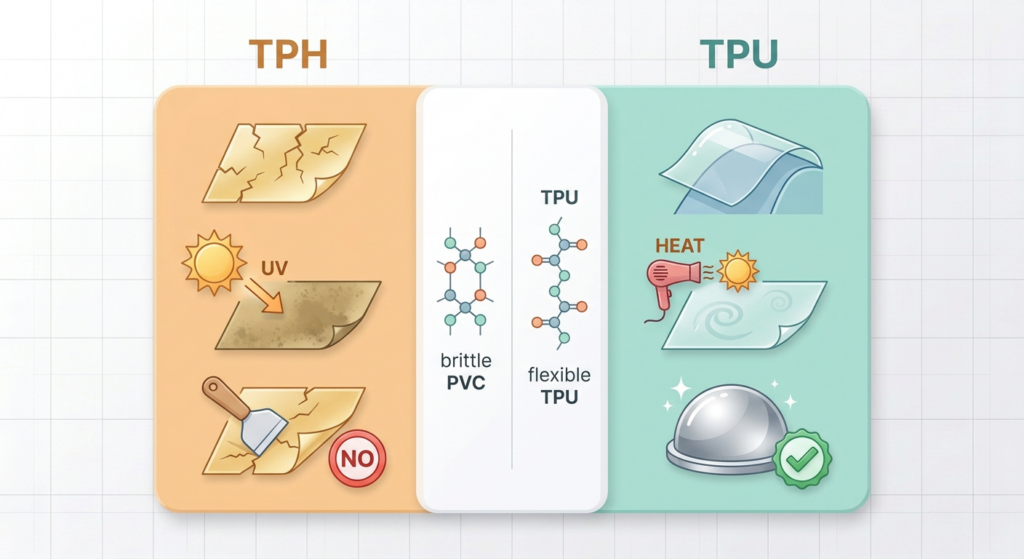
The first question to settle is the material. TPU (thermoplastic polyurethane) is the material used in quality paint protection film. It is flexible, so it stretches around curves, and most TPU films carry a self-healing top coat: light swirls and fine scratches fade when the film is warmed by the sun or warm water. Self-healing does not fix deep scratches that cut through the film or chemical etching.
TPH is a PVC-based film. It costs less, but it is stiffer, harder to fit on complex panels and generally less durable than TPU. Some shops sell it simply as “PPF” or “anti-scratch film” without naming the material, so ask in writing which material and which product line you are getting.
Brands and Finishes
We fit three film brands: Flexishield (our top recommendation), Nano Pro and 3M. Each has its own product lines and warranty terms, and the warranty on the film you choose can run up to 10 years, backed by the manufacturer. Our comparison of Flexishield, XPEL and 3M for the Lahore climate explains how the main brands differ.
You also choose a finish. Gloss film keeps the factory shine, matte turns a gloss paint flat, and satin sits in between with a soft sheen. Matte and satin change the look of the car, so see a sample panel in daylight before you decide.
Step 2: Choose a Coverage Package That Matches How You Drive
Coverage decides both the cost and how much of the car is protected. Most studios offer three broad levels:
- Front end: bumper, bonnet, front fenders and side mirrors. These panels face the road and take most stone chips, so this is the most common starting point for city and motorway drivers.
- High-impact areas: the front end plus door edges, door cups behind the handles, rocker panels, the rear bumper loading area and the area behind the wheels. This suits cars parked in tight markets and busy parking lots.
- Full body: every painted panel. This gives the most complete protection and is the usual choice for new, imported or high-value cars, and for owners who want a colour change with matte or satin film.
A proper quote names the exact panels covered, the film brand and product line, the finish and the warranty length. For typical price ranges by coverage, see our guide to paint protection film cost in Lahore for 2026. If your car spends winter in smog and dust, our PPF car protection guide for Lahore winters explains which coverage makes sense for that season.
Step 3: Wash, Decontamination and Paint Correction
Film magnifies whatever is underneath it. Any dirt, tar spot or swirl mark left on the paint will be sealed under a clear layer for years, so preparation is where a proper installation earns its price.
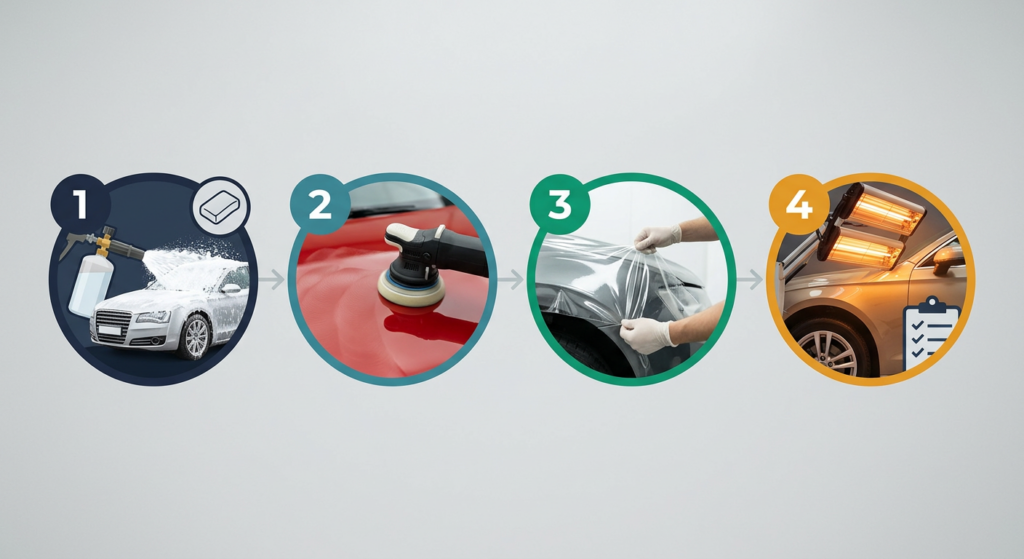
Preparation should include:
- A thorough wash of the whole car, including panel gaps, door jambs and badges where dust collects.
- Decontamination with an iron remover and a clay bar to lift bonded particles, tar and industrial fallout that washing alone leaves behind. Cars parked outdoors in Lahore tend to collect a lot of it.
- Paint correction where needed: machine polishing to remove swirls, light scratches and haze so the film locks in a clean finish.
- A final panel wipe to remove polishing oils so the adhesive bonds properly.
New cars need this too. Cars can pick up wash marks and light scratches during transport and at the dealership before they reach you. Ask whether paint correction is included in the quote or charged separately, and how many polishing stages your car’s paint needs. Our guide on removing swirl marks before applying PPF explains what the correction stage involves.
Step 4: The Installation Environment
Lahore air carries fine dust and smog particles. If film is fitted in an open garage or next to a car being machine-polished, particles settle on the adhesive and show as small bumps under the film. They cannot be removed without lifting and re-laying the film.
A proper installation bay is enclosed, kept clean, and temperature controlled so the film and adhesive behave predictably. Strong inspection lighting lets the installer spot dust, stretch marks and edge lift before the car leaves. Our own bay is climate-controlled and dust-extracted, with inspection lighting, and our installers are factory-trained and certified by Flexishield USA. You can see the space before you book on our virtual studio tour.
Whichever studio you choose, ask to see where your car will be fitted. If film work and polishing happen in the same open space, expect more dust in the finish.
Step 5: How the Film Is Cut and How the Edges Are Finished
Studios cut film in one of two ways, and many use both depending on the panel.
- Plotter-cut (pre-cut) patterns: a cutting machine cuts each piece from a vehicle-specific software template, so no blade touches the paint. Patterns are consistent, but standard templates often stop a few millimetres short of panel edges, leaving a visible line.
- Bulk-trimmed film: a larger sheet is laid on the panel and trimmed to shape on the car. This allows fuller coverage and wrapped edges, but it depends heavily on installer skill, because a careless blade can score the paint.
Edge wrapping means folding the film around the edge of a panel, such as the bonnet lip or door edge, so the seam sits out of sight. Wrapped edges look cleaner and collect less dirt, but not every edge can be wrapped, and some panels need relief cuts around sensors, badges and tight curves.
Neither method is automatically better. What matters is how the studio handles your car, so ask these questions:
- Which panels will be plotter-cut and which trimmed on the car?
- Which edges will be wrapped, and where will seams or relief cuts sit?
- If film is trimmed on the car, how do installers protect the paint from the blade?
- Will badges, emblems or trim be removed, and who refits them?
Our article on PPF pattern customisation goes deeper into how patterns are adjusted for specific vehicles.
Step 6: Curing and the First Weeks After Installation
PPF is fitted using a slip solution so the installer can position each piece, then squeegeed down. Some moisture stays trapped under the film and leaves through it over the following days and weeks. During this curing period you may see small water pockets or a slight haze, especially on large panels. In most cases these clear on their own as the film dries. Do not press, pick or push at them.
How long the whole job takes depends on the coverage you choose and the condition of the paint, and the studio confirms the timing when you book. Before you collect the car, check that the installer gives you clear first-week instructions, which usually include:
- how long to wait before the first wash (film makers set this, and it varies by product);
- no waxing, polishing or coating the film until it has cured;
- parking in shade where possible and wiping off bird droppings promptly with a soft, damp microfibre cloth;
- when to bring the car back for a post-installation check of the edges.
A small amount of edge lift on a sharp corner in the first weeks is something a proper studio should inspect and correct, so report it rather than pressing it down yourself.
Step 7: Aftercare, Warranty Registration and Maintenance
A proper service ends with paperwork as well as a clean car. You should receive the film brand and product line, a list of covered panels, written care instructions and warranty details. At Detail by Autostore, register your film through our warranty activation page soon after installation so your coverage is on record. It is also worth reading our guide to PPF warranty claims in Pakistan to understand what film warranties cover, such as yellowing, cracking and adhesive failure, and what they usually exclude, such as accident damage.
Washing and Long-Term Maintenance
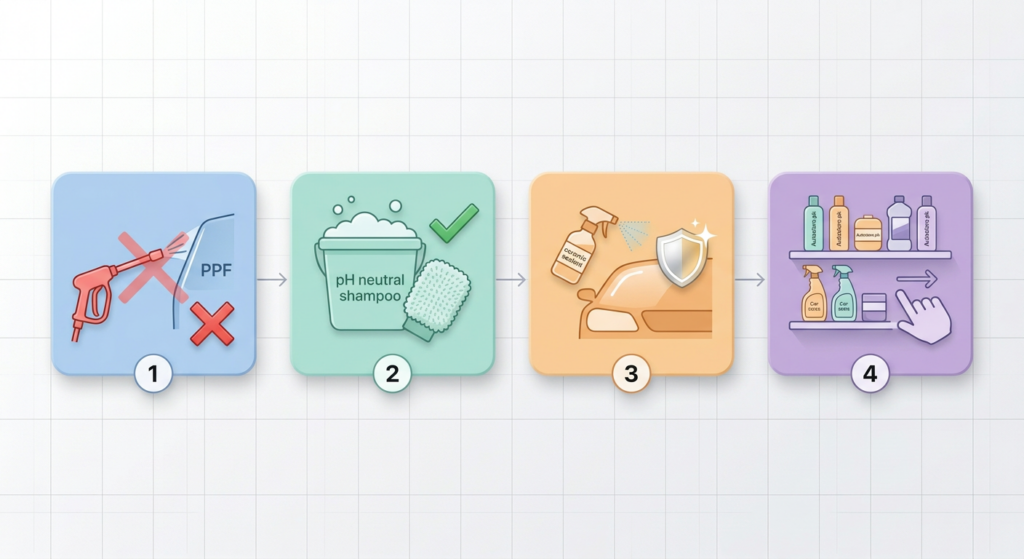
Once the film has cured, regular washing keeps it clear and helps the self-healing top coat work. A few simple habits make the biggest difference:
- Use a pH-neutral car shampoo. Dish soap and strong alkaline cleaners can dry out the top coat. You can find suitable options in the car wash and shampoo range at Autostore.pk.
- Pressure washing is fine, used with care. Keep the nozzle at a sensible distance from the car, use a wide fan spray, and never aim the jet directly at film edges or seams, where it can lift the film.
- Dry with clean microfibre towels rather than rough cloths or a chamois that drags grit across the film. Autostore.pk stocks microfibre towels suited to this.
- Remove bird droppings, tree sap and acidic deposits quickly. PPF resists etching better than bare clear coat, but these still need washing off promptly.
- Add a PPF-safe sealant or coating once the film has cured if you want easier washing and more water beading. Browse the coating range at Autostore.pk and check the label says it is safe for PPF. A coating adds slickness but does not add stone chip protection; the film does that.
- Avoid harsh automatic car washes with stiff brushes, and do not use abrasive polishes or solvent cleaners on the film.
For a full shopping list, see our guide to essential PPF care products. A yearly inspection at the studio is also worth booking, so small edge lifts or damaged sections are caught early while they are still simple to repair.
Frequently Asked Questions About PPF Installation in Lahore
Ready to protect your car? Book a free consultation on our appointment booking page, call 0321 2111 406 or WhatsApp 0302 2111 406, and we will inspect your paint and recommend the film and coverage that suit your car. You can also browse all our PPF, window tint and ceramic coating services before you visit.