

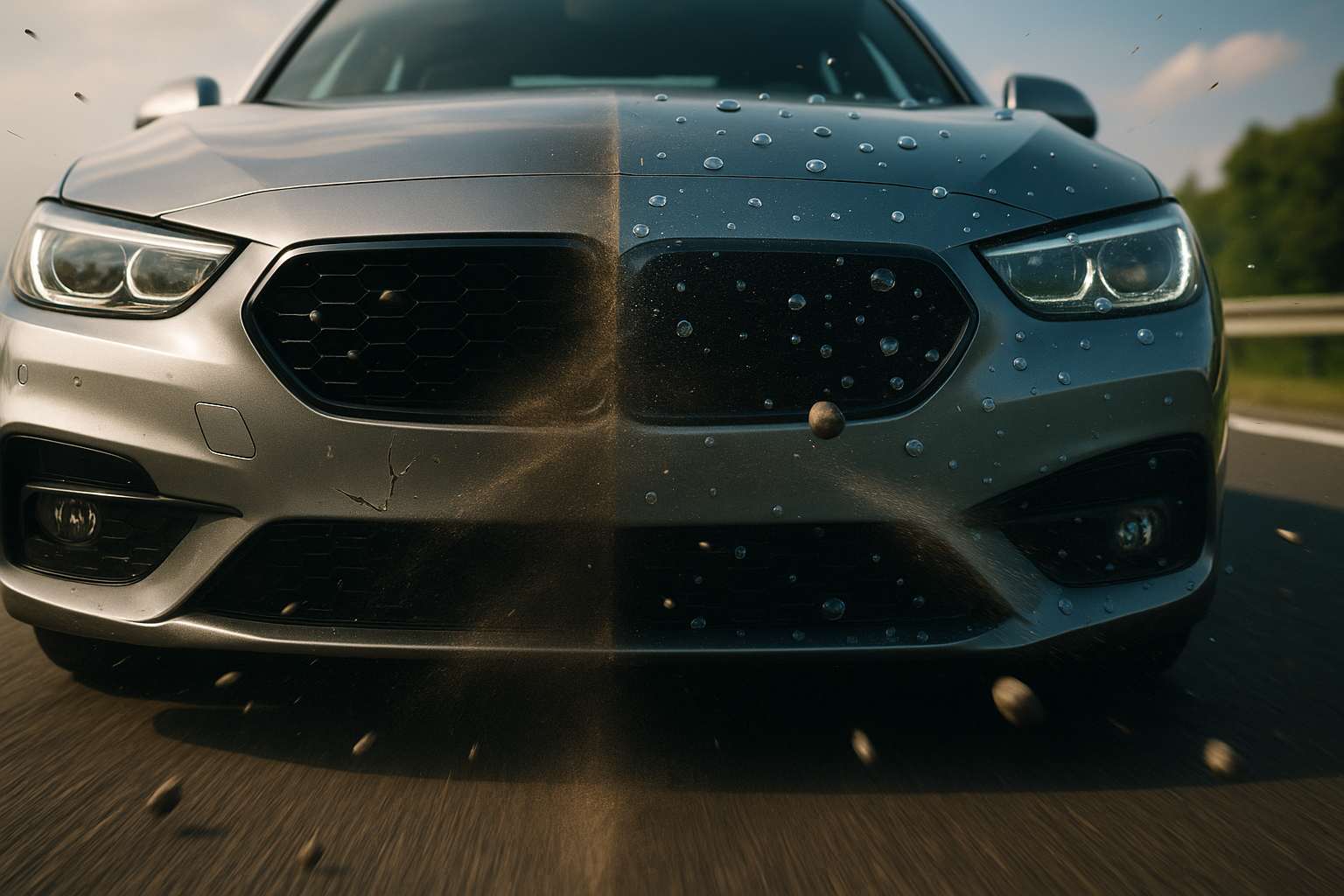
You’re cruising down the Lahore-Islamabad M-2 motorway, enjoying the drive. Suddenly, you hear it—a sharp, sickening PING from the front of your car. It’s the sound of a loose stone, kicked up by a truck, impacting your pristine paint at 140 km/h. You spend the rest of the trip praying the damage isn’t too bad. This scenario is all too common, which is why smart car owners are turning to PPF for motorway driving as their essential first line of defense.
Paint Protection Film (PPF), also known as a clear bra, is more than just a cosmetic accessory; it’s a functional piece of armor for your vehicle. This guide will provide expert stone chip protection tips and explain why PPF is a non-negotiable investment for anyone who regularly travels on Pakistan’s highways.
Why Motorway Stone Chips Are So Brutal
A stone chip on a city street is annoying. A stone chip on the motorway is a destructive force. The reason is simple physics: kinetic energy increases with the square of velocity. A small piece of gravel that would bounce off at 40 km/h becomes a paint-destroying projectile at 120 km/h.
On highways like the M-2, your car faces a constant barrage of threats:
- Loose Aggregate: Debris from construction zones or deteriorating road surfaces.
- Tyre Throw: Trucks and other large vehicles act like slingshots, launching stones and road debris directly at your front end.
- Bug Splatter: At high speeds, the acidic guts of Punjab’s highway insects can bake onto your paint in minutes, etching the clear coat if not cleaned promptly.
How PPF Absorbs and Deflects Impact Energy
So, how does a thin, clear film stop this damage? The magic is in its material and construction. Premium PPF is made from a tough, flexible Thermoplastic Polyurethane (TPU). This isn’t just a simple plastic sheet; it’s an engineered cushion, typically 8-10 mils (around 200 microns) thick.
When a stone hits the film, the TPU’s elastic properties allow it to stretch and absorb the impact energy, dispersing it over a wider area. Instead of the force being concentrated on a single point and digging into your paint, the gravel bullet glances off the film’s elastic skin. Furthermore, most modern films have a self-healing top coat. Minor scuffs and impacts on the film will disappear with exposure to heat from the sun or a heat gun.
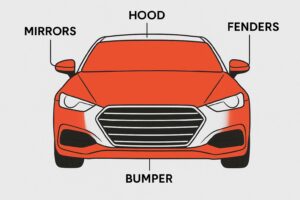
Protect High-Impact Zones First
For motorway driving, not all panels are at equal risk. A strategic approach provides the best protection for your investment.
|
Panel |
Chip Risk Level | Recommended Film Thickness | Optional Extras |
|
Front Bumper |
Extreme | 10 mil | Parking Sensors Cutouts |
|
Full Hood |
High | 8-10 mil |
Wrapped Edges |
| Front Fenders | High | 8 mil |
Full Fender Coverage |
| Side Mirrors | High | 8 mil |
— |
| Headlights | High | 8 mil |
Prevents yellowing & pitting |
| A-Pillars | Medium | 8 mil |
Protects from high-angle debris |
| Windshield | High | Specialized Windshield Film |
Reduces pitting & cracking risk |
Film Options and Coverage for Highway Warriors
When choosing PPF, you have options for thickness and coverage:
- Standard vs. Heavy-Duty Film: Most quality films are around eight mils thick, which is excellent for general protection. For the flat, forward-facing surfaces of your bumper that take the most direct hits, a thicker 10 mil “track-pack” film offers superior impact resistance.
- Gloss vs. Matte: You can choose a film that matches your paint. Optically clear gloss PPF will make your paint look even deeper and shinier. A matte or “stealth” film can transform your car’s finish while providing the same level of protection.
- Coverage Packages:
- Partial Front: Covers the first 18-24 inches of the hood and fenders. This is a budget option, but it leaves a visible line.
- Full Front (Motorway Package): The recommended choice. This covers the entire front bumper, full hood, full front fenders, and side mirrors. It provides seamless protection with no visible edges on the main panels.
Installation is Key: Techniques for High-Speed Durability
A cheap, poorly installed PPF will lift and peel under the constant wind blast of motorway speeds. A professional installation focuses on longevity.
The secret lies in the edges. A professional installer will wrap the film around the edges of panels, such as the hood and fenders, wherever possible. This creates a seamless look and, more importantly, gives the wind no edge to catch and begin peeling the film back. On complex bumper curves where wrapping isn’t possible, the installer uses precise relief cuts and a specific tack solution to ensure the edges are perfectly bonded.
The final step is patience. Your car needs a 48-hour curing period in a controlled environment before you take it on a high-speed run. This allows the adhesive to bond fully, ensuring the film can withstand the rigors of the motorway for years to come.
Maintenance Habits to Keep Your Film Intact
- Wash After Every Motorway Trip: Promptly wash the car to remove acidic bug splatter and road tar before they can cause damage.
- Use the Two-Bucket Method: This prevents you from rubbing grit into the film, which can dull its self-healing top coat.
- Use PPF-Safe Shampoo: A pH-neutral car shampoo is essential.
- Avoid High-Pressure Washing on Edges: Keep the pressure washer nozzle at least 30 cm away from any visible film edge.
- Apply a PPF Sealant: Use a synthetic sealant or a ceramic coating designed for PPF every few months. This makes cleaning easier and provides an additional layer of UV protection.
- Inspect Edges Quarterly: Run your finger along the edges to check for any signs of lifting. Your installer can often resolve a small issue before it becomes a major problem.
- Blot, Don’t Wipe, Stubborn Stains: For tough bug guts, lay a microfiber towel soaked in bug remover on the spot for a few minutes to soften it, then gently blot it away.
- Trust the Self-Healing: For light scuffs, park the car in the sun. The heat will often cause the film to heal itself.
Myths vs. Facts: PPF for Motorway Driving
|
The Claim |
The Reality | The Takeaway for You |
|
“PPF is bulletproof and stops all chips.” |
PPF is a sacrificial layer. It dramatically reduces chips but can be pierced by a very sharp, high-velocity object. |
It’s about damage reduction, not total invincibility. A pierced film is better than a deeply chipped hood. |
| “You can’t see the film.” | High-quality film installed correctly is nearly invisible, at 99.9%. Poor installation can leave stretch marks or bubbles. |
Your choice of installer is as important as your choice of film. |
| “PPF turns yellow over time.” | This was true for old PVC films. Modern TPU films have UV inhibitors and are warrantied against yellowing for up to 10 years. |
Invest in a quality, modern film from a reputable brand, such as FlexiShield or XPEL. |
Cost of PPF vs. Cost of Repaint
|
Option |
Initial Cost (Approx. PKR) | Long-Term Effect | Resale Value |
|
Full Front PPF |
70,000 – 120,000 | Preserves original factory paint perfectly. |
Maximized |
| Repainting Bumper & Hood | 30,000 – 50,000 | Non-factory paint, risk of color mismatch. |
Decreased |
FAQs: Is PPF Worth It for Motorway Driving?
1. Does PPF stop EVERY single stone chip?
No, and any installer who claims it does is not being honest. PPF is designed to stop the vast majority (95%+) of common road debris impacts. An extremely sharp, heavy object at a very high speed can puncture the film. However, even in that case, the film will have absorbed most of the energy, resulting in a much smaller mark than you would have had on bare paint.
2. Can I apply a ceramic coating on top of PPF for better bug removal?
Absolutely! This is the ultimate combination for a motorway car. The PPF provides the physical impact protection, and the super-slick ceramic coating on top makes washing off bug splatter and road grime incredibly easy.
3. Will my car insurance cover damage to the PPF?
Generally, no. Most standard insurance policies cover damage to the vehicle itself, not aftermarket additions like PPF. If the impact is severe enough to damage the panel beneath the film, the panel repair would be covered; however, you would likely be responsible for replacing the film yourself.
Conclusion: Drive with Confidence
The next time you merge onto the motorway for a long drive, imagine hearing that dreaded ‘PING’ and just smile. That’s the peace of mind that PPF for motorway driving provides. It’s the confidence of knowing your film just took the hit, so your precious factory paint didn’t have to. It’s an investment in preserving your car’s beauty and value, one protected kilometer at a time.
Before your next trip to Islamabad, protect your investment. Book a free front-end inspection at our Gulberg studio and get 10% off a motorway-spec full-front PPF in Pakistan this month.
Call or WhatsApp: +92-302-2111-406