

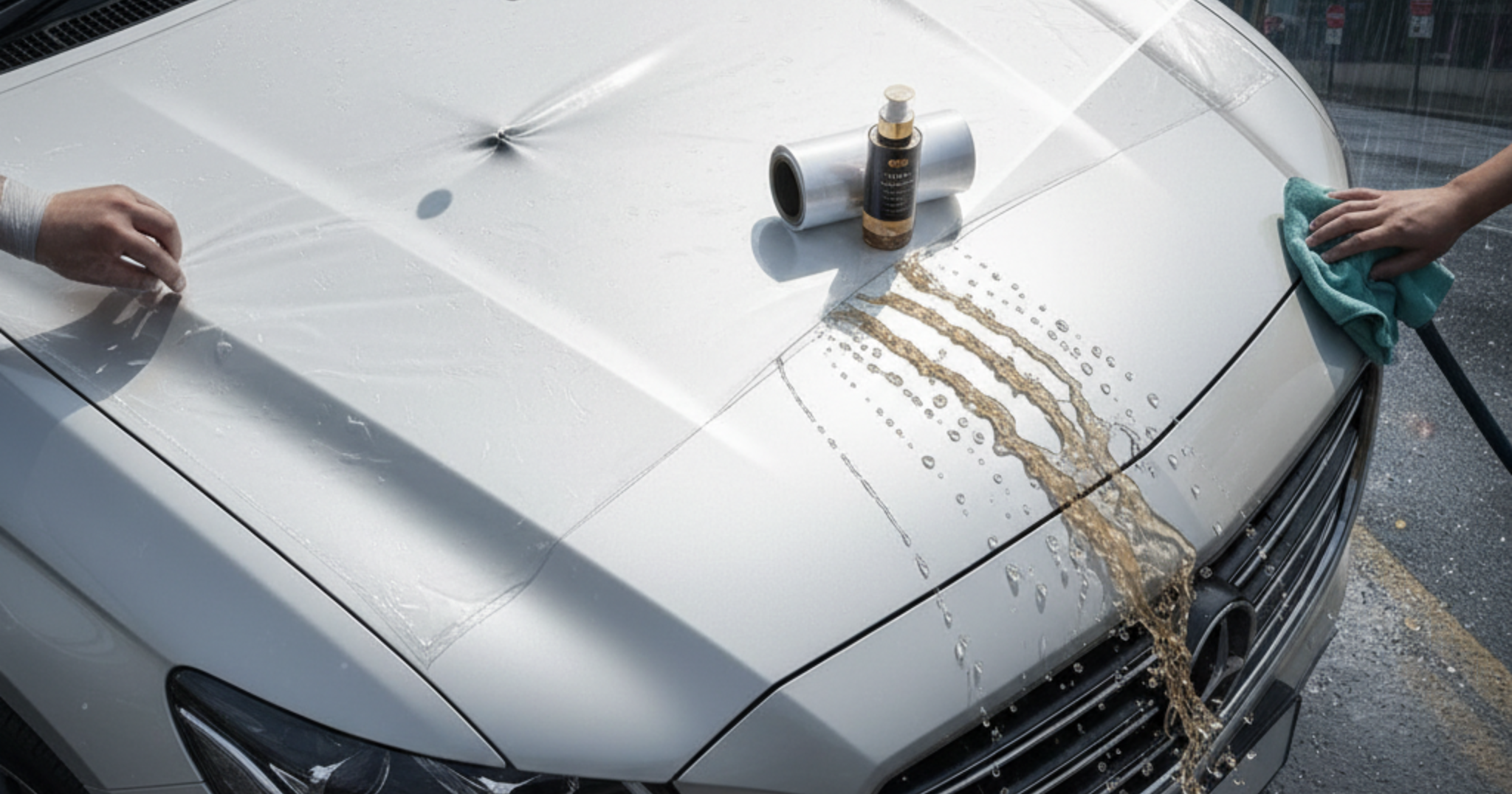
You’ve finally saved up for that dream car. Maybe it’s a brand-new Civic sitting in your driveway, or perhaps a pre-owned Mercedes you’ve wanted for years. Either way, you know Lahore’s dust storms, Karachi’s humidity, and Pakistan’s brutal summer sun will attack that beautiful paint the moment you drive off. So you start researching paint protection. Within minutes, you’re drowning in confusing information. One article swears Paint Protection Film is the only real solution. The next insists that Ceramic Coating provides everything you need at half the cost. Your friend claims he got both, and that’s the only way. The detailing shop offers three different packages with technical terms you don’t understand. Finding the winner between PPF vs Ceramic Coating in Pakistan is becoming increasingly confusing for you!
Here’s what nobody tells you upfront: PPF and Ceramic Coating are fundamentally different products solving different problems. Comparing them directly is like asking whether a helmet or airbags are better protection—they both protect, but in completely different ways, and ideally you’d want both.
This comprehensive guide cuts through the marketing noise and gives you straight answers on PPF vs. ceramic coating in Pakistan. We’ll explain exactly what each product does, what it costs, how long it lasts, what it protects against, and most importantly, which one (or both) makes sense for your specific situation, budget, and vehicle.
Understanding Paint Protection Film (PPF)
Think of Paint Protection Film as a clear, thick shield physically covering your car’s paint. It’s basically transparent armor.
What PPF Actually Is
PPF is a polyurethane film, typically 6-8 millimeters thick, applied directly onto painted surfaces. Premium versions like XPEL Ultimate Plus include self-healing properties—minor scratches and swirl marks disappear when exposed to heat.
The film is optically clear when properly installed, meaning you shouldn’t see it at all unless you’re specifically looking for edge lines. It’s designed to absorb impacts that would otherwise chip or scratch paint.
What PPF Protects Against
Here’s where PPF truly shines:
Stone Chips and Road Debris: This is PPF’s primary purpose. When a rock flies off a truck on the motorway at 120 km/h and hits your bumper, the film absorbs the impact. Without PPF, you’d have a permanent paint chip. With PPF, the film takes the damage while your paint remains perfect.
Scratches and Abrasions: Someone keys your car in a parking lot (unfortunately, common in Pakistan). Someone’s bag drags across your door. A motorcycle brushes your fender in traffic. PPF prevents these contacts from reaching your paint. The film might show damage, but your actual paint stays pristine.
Minor Collisions: Light parking-lot taps, shopping-cart bumps, and door dings that would normally dent or scratch paint often just compress the PPF without damaging the underlying paint.
Environmental Contaminants: Bird droppings, tree sap, bug splatter, and industrial fallout that would normally etch into paint instead sit on the PPF surface. When you wash them off, they’re gone completely with no paint damage.
UV Degradation: Quality PPF includes UV inhibitors preventing sun damage to both the film and the paint underneath. Your paint won’t fade or oxidize even after years of harsh Pakistani sunlight.
What PPF Does NOT Protect Against
Understanding PPF’s limitations matters as much as understanding its strengths:
Water Spots and Mineral Deposits: PPF doesn’t prevent hard water from leaving spots. Rain, washing with untreated water, and environmental moisture still leave mineral deposits on the film surface.
Swirl Marks from Washing: If you wash your PPF-covered car improperly—using dirty towels, harsh brushes, or contaminated wash buckets—you’ll still create swirl marks on the film surface.
Chemical Staining: Harsh chemicals, acids, and aggressive cleaners can stain or damage PPF, just as they’d damage bare paint.
Heat Damage: Extreme heat beyond normal environmental exposure (such as parking next to a fire or welding sparks) can damage PPF.
Major Impacts: A serious collision that dents metal panels will damage the PPF and underlying paint. PPF protects against minor impacts, not major accidents.
Understanding Ceramic Coating
Ceramic Coating takes a completely different approach. Instead of physical armor, it’s a chemical bonding layer that enhances paint properties.
What Ceramic Coating Actually Is
Ceramic Coating (also called nano-ceramic coating or glass coating) is a liquid polymer that chemically bonds with your car’s paint. Once cured, it creates a hard, hydrophobic (water-repelling) layer over the paint surface.
Think of it as a semi-permanent wax—but exponentially harder, longer-lasting, and more protective than any traditional wax product.
What Ceramic Coating Protects Against
Ceramic Coating excels in areas where PPF is weak:
Water Spots and Mineral Deposits: The hydrophobic properties mean water beads up and rolls off rather than sitting on paint. This dramatically reduces water spotting, which is crucial in Pakistan, where hard water is common.
Chemical Staining: The hard ceramic layer resists chemical etching from bird droppings, tree sap, bug splatter, and industrial fallout. These contaminants don’t bond with the coating as they would with bare paint, making them easier to remove before damage occurs.
UV Protection: Quality ceramic coatings include UV inhibitors that prevent paint oxidation and fading. Your paint maintains its depth and gloss for years despite harsh sun exposure.
Minor Scratches: The hard coating provides some scratch resistance—not as thick as PPFs, but better than bare paint. Light swirls from improper washing are less likely to occur.
Oxidation and Fading: Ceramic coating seals paint, preventing oxygen interaction that causes oxidation. Your paint stays vibrant rather than becoming dull and chalky over time.
Dirt and Contamination: The slick, non-porous surface means dirt and grime don’t bond as easily. Your car stays cleaner longer, and washing is easier with less risk of scratching.
What Ceramic Coating Does NOT Protect Against
Understanding these limitations prevents disappointment:
Stone Chips: Ceramic coating provides essentially zero protection against rock impacts. A stone hitting ceramic-coated paint at highway speeds creates the same chip as it would on uncoated paint.
Deep Scratches: The coating is only a few microns thick. Any scratch that would penetrate bare paint will also penetrate the ceramic coating. You’re not getting physical barrier protection.
Dents and Dings: Parking lot collisions, door dings, and impact damage affect ceramic-coated cars exactly like uncoated cars. The coating is too thin to absorb any meaningful impact.
Automatic Car Wash Damage: Taking your ceramic-coated car through harsh automatic washes with stiff brushes can still create swirl marks and potentially damage the coating.
Major Chemical Spills: While ceramic coating resists common environmental contaminants, exposure to aggressive chemicals (such as acid spills or strong solvents) can damage the coating.
Direct Comparison: PPF vs Ceramic Coating
Let’s compare PPF vs Ceramic Coating in Pakistan across key decision factors:
Physical Protection Capability
Winner: PPF by a massive margin
PPF provides physical barrier protection. It absorbs impacts, prevents scratches from reaching paint, and shields against abrasions. If your primary concern is protecting against parking lot damage, highway stone chips, and physical contact, PPF wins decisively.
Ceramic coating offers minimal physical protection—maybe a 10-15% improvement in scratch resistance over bare paint, and essentially zero improvement in impact resistance.
Think of it this way: if someone drags a suitcase across your door, PPF might save your paint. Ceramic coating won’t.
Chemical and Environmental Protection
Winner: Ceramic Coating by a significant margin
Ceramic coating excels at repelling water, resisting chemical etching, preventing water spots, and making your car easier to clean. If you park under trees, deal with bird droppings, or wash with hard water, ceramic coating provides superior day-to-day protection.
PPF offers some environmental protection, but its surface is more susceptible to water spotting and requires more maintenance to keep pristine than ceramic coating.
Appearance Enhancement
Winner: Ceramic Coating slightly
Both products enhance gloss and depth when properly applied to a perfect paint finish. However, ceramic coating typically provides slightly more “pop” and depth to the paint appearance.
PPF is designed to be invisible. When installed perfectly, you shouldn’t notice it. Ceramic coating actively enhances appearance with deeper gloss and a wet-look finish.
That said, PPF installed by experts like DetailByAutostore.pk looks fantastic—you get both protection and enhanced appearance.
Maintenance Requirements
Winner: Ceramic Coating clearly
Ceramic-coated cars are easier to wash, stay cleaner longer, and require less frequent detailing. The hydrophobic properties mean dirt slides off easily, and water doesn’t spot.
PPF requires more careful maintenance. You need to use PPF-safe cleaning products, avoid harsh chemicals, and periodically clean the film thoroughly to prevent contamination buildup in the edges.
Longevity and Durability
Winner: PPF slightly
Premium PPF lasts 10+ years with proper care. The film may show some wear by year 8-9, but it continues to protect the paint throughout its lifespan.
Quality ceramic coatings last 4-6 years, with premium coatings lasting 7-8 years. Eventually, the coating degrades and needs to be reapplied.
However, this comparison is somewhat unfair—PPF is a physical product that can be removed and replaced. Ceramic coating is a chemical bonding that gradually wears away.
Coverage Flexibility
Winner: PPF significantly
You can install PPF on specific high-impact areas (front bumper, hood, fenders) while leaving other areas uncovered. This partial coverage strategy maximizes budget efficiency.
Ceramic coating is typically applied to the entire vehicle—partial coating doesn’t make sense because the product works by uniform coverage.
This flexibility makes PPF more accessible at various budget levels. You can get meaningful protection for PKR 65,000 that covers just the front-end, or spend PKR 300,000+ for full-body coverage.
Real-World Usage Scenarios: PPF vs Ceramic Coating in Pakistan?
You Should Choose PPF If:
You frequently drive on highways: The Lahore-Islamabad motorway, the Karachi-Hyderabad highway, and other high-speed routes mean constant exposure to stone chips. PPF is the only protection that actually prevents this damage.
You park in tight spaces: Parking in the cramped spots at Fortress Stadium, Packages Mall, or Dolmen Mall means your doors are constantly at risk of dings from adjacent vehicles. PPF protects against this contact damage.
You have young children: Kids dragging toys, climbing in/out with shoes, and general roughness mean your paint takes constant abuse. PPF handles this wear far better than bare paint or ceramic coating.
You Should Choose Ceramic Coating If:
You park outdoors regularly: whether at home, at the office, or at markets, outdoor parking means constant sun exposure, bird droppings, and tree sap. Ceramic coating protects against all these environmental factors.
You deal with hard water: If you wash at home using a regular water supply, hard water spots are inevitable. Ceramic coating’s hydrophobic properties dramatically reduce this problem.
Your budget is limited: At PKR 60,000-90,000 for a full vehicle, ceramic coating offers meaningful protection at an accessible price. It’s better protection than nothing when PPF exceeds the budget.
You Should Choose Both If:
You have a moderate-to-high budget: If you can afford PKR 180,000-250,000 for paint protection, combining front-end PPF with full ceramic coating delivers optimal results.
Your vehicle is high-value: For cars worth PKR 8+ million, comprehensive protection makes financial sense, as it protects a significant asset.
The Combined Approach: Why PPF + Ceramic Coating Works Best
Here’s what most people don’t realize: PPF and Ceramic Coating aren’t competing products—they’re complementary products that work better together.
How the Combination Works
Install PPF on high-impact areas (front bumper, hood, fenders, mirrors, door edges). These zones take 85% of all physical damage despite being only 35-40% of the painted surface.
Then apply ceramic coating over the entire vehicle—both the PPF-covered areas and the bare paint.
Benefits of Ceramic Coating Over PPF:
The ceramic coating makes the PPF easier to maintain by adding hydrophobic properties to the film surface. Water beads off, dirt slides away, and cleaning is easier without risk of contaminating the film edges.
Ceramic coating also enhances the PPF’s appearance, adding depth and gloss while maintaining the film’s optical clarity.
Benefits of PPF Under Ceramic Coating:
The PPF provides physical protection that the ceramic coating can’t deliver. Stone chips never reach the ceramic coating because they first impact the PPF.
This combination means your high-impact zones get both physical barrier protection (PPF) and chemical protection (ceramic coating), while your lower-risk zones still get environmental protection (ceramic coating alone).
Professional Installation: Why Expertise Matters
No matter what you choose from PPF vs Ceramic Coating in Pakistan, the installation requires genuine expertise. These aren’t DIY projects—professional installation is an essential investment.
PPF Installation Complexity
Quality PPF installation involves:
- Precise computer-cutting for perfect pattern fit
- Meticulous surface preparation and decontamination
- Expert application technique prevents bubbles and contamination
- Perfect edge tucking creates invisible seams
- Proper heat activation ensures optimal adhesion
- Final inspection, catching any imperfections
Why DetailbyAutostore.pk Stands Out
DetailByAutostore.pk specializes in both PPF and ceramic coating installations, with expertise covering all vehicle types:
- Experienced Technicians: 7+ years average experience with manufacturer certifications
- Premium Products: Exclusive use of proven brands—XPEL, 3M, and premium ceramic coating systems
- Professional Facility: Climate-controlled installation bays meeting international standards
- Comprehensive Service: Paint correction, protection installation, and maintenance guidance included
- Proven Results: Portfolio showcasing hundreds of successful installations
Contact them at +92-321-2111-406 or visit their Gulberg location at 99-B-III Hussain Chowk, MM Alam Road for professional consultation about optimal protection for your specific vehicle and situation.
Getting Started with Paint Protection
Ready to protect your investment? Here’s your action plan:
Step 1: Schedule a Professional Consultation
Don’t make protection decisions based on articles alone. Schedule an in-person consultation where experts examine your specific vehicle, assess paint condition, understand your driving patterns, and recommend appropriate protection.
Step 2: Get Detailed Quotes
Request itemized quotes showing:
- Paint correction costs based on actual inspection
- Product brands and specifications
- Installation timeline
- Warranty terms
- Total investment, including all costs
Compare quotes carefully—understand what you’re getting for your money.
Step 3: Verify Installer Credentials
Review portfolio, check references, and verify manufacturer certifications. Don’t trust your valuable vehicle to unproven installers.
Step 4: Plan Installation Timing
Both services require multiple days. Plan accordingly:
- Ceramic coating: 2-3 days
- Front-end PPF: 2-3 days
- Full-body PPF: 5-7 days
- Combined services: 5-8 days
Ensure you have transportation alternatives during the installation period.
Step 5: Understand Maintenance Requirements
Ask your installer for specific care instructions. Proper maintenance ensures optimal performance throughout the product’s lifespan.
Contact DetailbyAutostore.pk
For expert guidance on PPF vs Ceramic Coating for your specific vehicle:
- Phone: +92-321-2111-406
- Location: 99-B-III Hussain Chowk, MM Alam Road, Gulberg, Lahore
- Website: detailbyautostore.pk
FAQs: PPF vs Ceramic Coating in Pakistan
Q: Can I apply ceramic coating over Paint Protection Film, and does this combination provide better protection than either product alone?
Yes, applying ceramic coating over PPF is not only possible but actually recommended for optimal results. This combination leverages the strengths of both products—PPF provides physical barrier protection against stone chips, scratches, and impacts, while ceramic coating adds hydrophobic properties, chemical resistance, and easier maintenance to the PPF surface. The ceramic coating makes the PPF easier to clean because water and dirt slide off more readily, preventing contaminant buildup at film edges that can lead to staining or lifting. It also enhances the PPF’s appearance by adding depth and gloss. The combination costs more upfront—typically PKR 50,000-65,000 additional for ceramic coating over existing PPF—but delivers superior long-term results.
Q: How do PPF and ceramic coating perform in Pakistan’s extreme climate conditions, and does one product handle heat, dust, and monsoon better than the other?
Both products perform well in Pakistan’s challenging climate, but they handle different conditions differently. For extreme summer heat (45-48°C), premium PPF brands like XPEL Ultimate Plus and 3M Scotchgard are rated to 80°C+ and handle Pakistani summers without yellowing or degrading, provided you choose quality film rather than budget alternatives, which may yellow faster. Ceramic coating actually benefits from heat—the curing process is temperature-activated, so the Pakistani climate helps coatings cure harder and bond more thoroughly. For dust and sandstorms common in Lahore, Karachi, and other cities, ceramic coating provides superior day-to-day benefits because its slick surface prevents dust from sticking, keeping your car cleaner between washes.
Q: If I can only afford one paint protection option right now, how do I decide between PPF and ceramic coating based on my specific situation and vehicle usage?
Your decision should prioritize the damage type you’re most likely to encounter based on your specific driving patterns and parking environment. Choose PPF if you: frequently drive on highways where stone chips are inevitable (Lahore-Islamabad motorway, Karachi-Hyderabad highway, or any regular high-speed driving); park in tight commercial spaces where door dings are common (shopping malls, office parking, crowded markets); have young children who rough-handle the car creating scratches and scuffs; or plan to sell your vehicle in 5-7 years where perfect paint dramatically affects resale value. Front-end PPF protecting just bumper, hood, and fenders costs PKR 100,000-140,000 and prevents 85% of damage despite covering only 35% of paint—optimal value for physical protection. Choose ceramic coating if you: primarily drive in city conditions with limited highway exposure; park outdoors regularly facing sun, bird droppings, and tree sap; wash at home using hard water that creates persistent water spots; want easier maintenance requiring less frequent washing and reduced effort; or have budget limitations preventing PPF investment.
Final Thoughts: PPF vs Ceramic Coating in Pakistan
Whether you choose PPF, ceramic coating, or both, paint protection represents one of the smartest investments you can make in your vehicle.
Consider this reality: Without protection, your paint accumulates damage—stone chips, scratches, fading, and water spots. Each defect reduces the vehicle’s resale value and diminishes your daily enjoyment of it.
Paint correction to restore damaged paint often costs PKR 50,000-100,000+. Multiple repairs over ownership can easily exceed the cost of protection products—and repairs never restore the true factory finish.
Protection products prevent damage rather than fixing it later. This proactive approach saves money, maintains higher resale value, and ensures your vehicle looks fantastic throughout ownership.
The PPF vs Ceramic Coating in Pakistan debate isn’t about which product is “better”—it’s about which product (or combination) matches your specific needs, budget, driving patterns, and protection priorities.
Understand what each product actually does, recognize your vehicle’s primary threats, assess your realistic budget, and make informed choices delivering optimal value for your situation.