

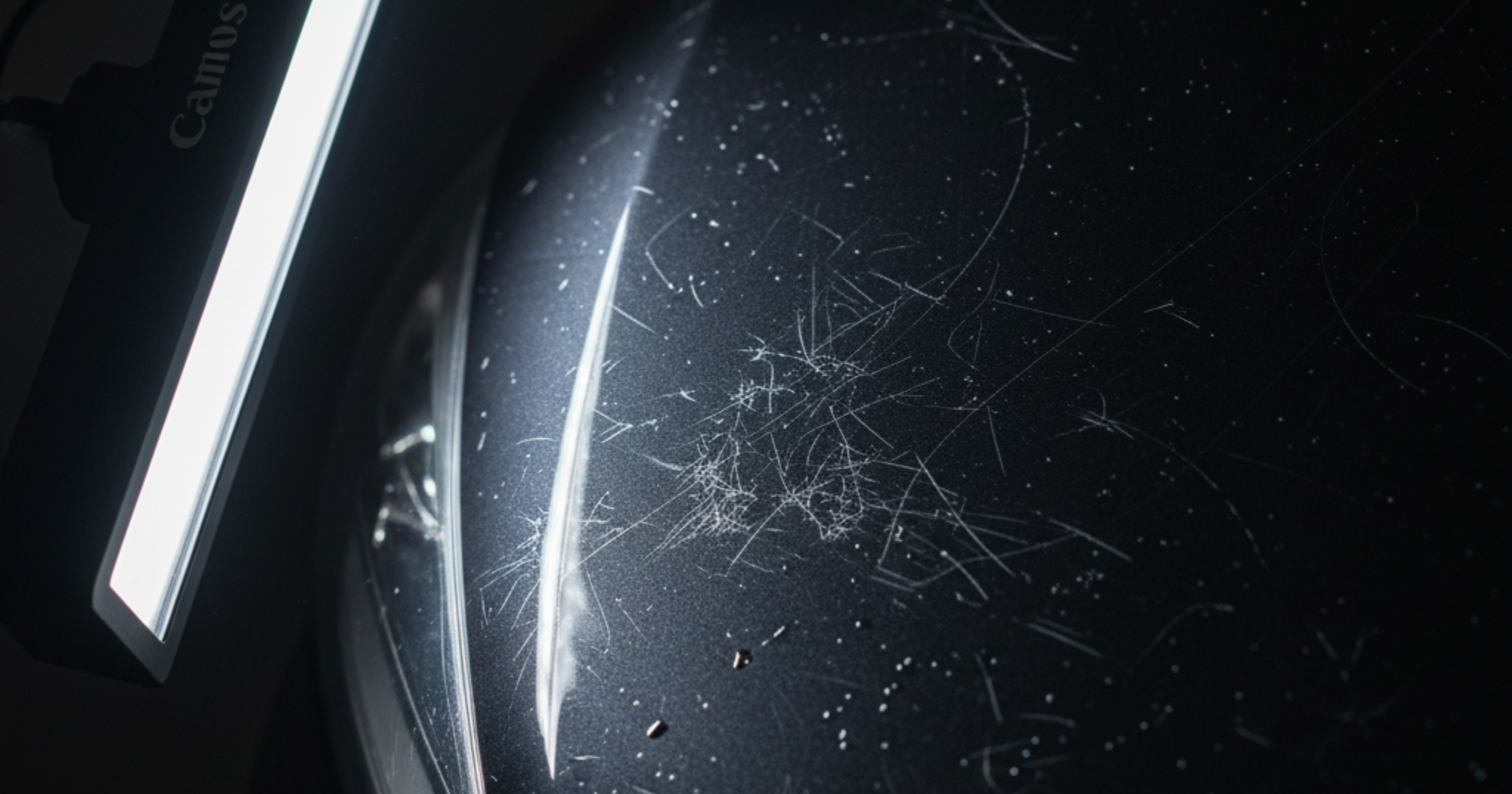
Your car’s paint is dying a slow death, and you’re paying someone to kill it. I know that sounds dramatic, but walk outside right now and look at your car under direct sunlight. If you see tiny circular scratches all over the surface, what detailers call swirl marks, or if your paint doesn’t have that deep, reflective shine it had when you bought the car, you’re looking at damage caused by improper washing and detailing. The worst part? You probably paid for that damage. Every time you took your car to that convenient Rs. 500 car wash down the street. Every time someone detailed your vehicle without proper training, tools, or technique. Every automatic car wash you drove through because it was quick and easy. This is why you need to know about the potential damage to your car’s detailing caused by very simple decisions you make.
This isn’t about being picky or obsessive about appearance. This is about understanding that your car’s paint is one of its most valuable components, and that once it’s damaged, proper repair can cost thousands of rupees, sometimes tens of thousands, depending on the severity.
Let me show you exactly what’s happening to your vehicle and why the “cheap” detailing you’re getting isn’t cheap at all when you factor in the long-term cost.
The Rs. 500 Car Wash That’s Costing You Rs. 50,000
There’s a car wash near my office in Gulberg that’s always busy. They charge Rs. 500 for an exterior wash and dry, Rs. 800 if you want interior vacuuming included. The line is consistently 4-5 cars deep because people love the convenience and price.
I watched them work one afternoon, and within ten minutes I counted seven major mistakes that were destroying customers’ paint: They used a single bucket of increasingly dirty water for all the wash mitts. By the third car, that water was full of dirt particles that were essentially being rubbed across every subsequent vehicle’s paint like sandpaper.
The wash mitts themselves were old, contaminated, and falling apart. I could see embedded particles in the fabric that were scratching every surface they touched.
They started washing from the bottom of the car, the dirtiest area with the most abrasive particles, and moved upward, transferring all that contamination to cleaner panels. Their drying “technique” involved dragging a filthy chamois across the paint, pushing water and dirt around rather than safely lifting it off.
Every single car that came through that wash left with fresh scratches in the paint. The owners didn’t notice immediately because the damage is microscopic at first, you can’t see individual scratches with the naked eye under most lighting conditions.
But those microscopic scratches accumulate. After 10, 20, or 50 washes, your paint is covered in thousands of tiny scratches that dull the finish, reduce gloss, and eventually become visible even in normal lighting.
The Automatic Car Wash Lie
Automatic car washes are even worse, and they’re marketed as the “safe” option because there’s no human error involved. That’s complete nonsense.
Those spinning brushes and cloth strips that beat against your car? They’re covered in dirt and debris from every previous vehicle that went through. They’re essentially industrial-strength Brillo pads that are scratching your paint with every pass.
I’ve seen paint finishes absolutely destroyed by regular use of automatic car washes. The damage pattern is distinctive: long, vertical scratches from the spinning brushes and horizontal scratches from the cloth drying strips.
There’s a Mercedes E-Class owner I know who used an automatic car wash twice a week for a year because it was convenient and “touchless” sounded safe. When he finally took his car to a proper detailer for paint correction, the estimate was Rs. 85,000 to remove the scratches and restore the finish. That’s 170 automatic-wash-worth of money spent to fix damage caused by the automatic washes themselves.
The math doesn’t work. The convenience isn’t worth it. The “touchless” automatic washes that use high-pressure water and harsh chemicals aren’t much better; they can’t properly clean your car without physical agitation, and the chemicals they use to compensate are often too aggressive for automotive paint.
What Proper Car Washing Actually Looks Like
Before we go further into what’s being done wrong, let me show you what correct technique looks like, because most Pakistanis have literally never seen a car washed properly.
The Two-Bucket Method
You need two buckets: one with soapy water, one with clean rinse water. You dip your wash mitt in the soap bucket, wash a section of the car, then rinse the mitt thoroughly in the rinse bucket before dipping it back into the soap bucket. This prevents dirt from contaminating your soap water and being transferred back onto the paint.
Better yet is the three-bucket method: soap, rinse, and a separate bucket for wheels and tires so that heavily contaminated wash media never touches painted surfaces.
Pre-Rinse and Snow Foam
This step alone probably prevents 70% of the scratches that occur during washing because you’re not dragging particles across the paint; the foam lifts them away.
Separate Media for Different Areas
You never use the same wash mitt for wheels, tires, and painted body panels. Brake dust is extremely abrasive, and cross-contamination will scratch paint. Quality detailers use different colored mitts so there’s no confusion about which is for what.
Proper Drying Technique
After washing, the car is dried using clean, soft microfiber drying towels with a blotting and dragging motion, not circular scrubbing. Many professional detailers use an air blower to remove most of the water without any physical contact, then finish with microfiber.
Paint-Safe Products
Everything that touches your paint- soap, wash mitts, drying towels, detail sprays- should be specifically designed for automotive use and should be clean. This seems obvious, but you’d be shocked how many “detailers” use whatever’s cheapest or most convenient rather than what’s actually safe for paint.
Now compare this process to what happens at a typical cheap car wash in Pakistan. There’s no comparison. It’s like comparing surgery performed in a hospital operating room versus someone going at you with a kitchen knife in an alley.
The Swirl Mark Epidemic
Drive through any parking lot in Lahore, Karachi, or Islamabad and look at cars under the sun. The vast majority, probably 80% or more, have visible swirl marks covering the paint.
These are circular scratches that become visible under direct lighting, especially on dark-colored cars. Improper washing and drying techniques, contaminated wash media, and the use of the wrong products cause them.
Here’s what most people don’t understand: swirl marks aren’t just cosmetic. They’re actual physical damage to your paint’s clear coat. Each scratch is microscopic, but collectively they reduce paint thickness, diminish UV protection, and create pathways for environmental contaminants to reach deeper layers of paint.
Left unchecked, severe swirl marks can lead to clear coat failure, where the protective top layer of your paint begins to peel or delaminate. At that point, you’re looking at a full repaint of affected panels; we’re talking Rs. 150,000 to Rs. 300,000 or more depending on how many panels need work and what kind of vehicle you’re driving.
I’ve seen BMWs and Mercedes with clear coat failure that started as “just some swirl marks” the owner ignored for years. By the time they decided to address it, the damage was irreversible without repainting.
The “Detailing” Services That Make Things Worse
It’s not just car washes that destroy paint. Many services marketed as “professional detailing” are actually causing more harm than good.
Aggressive Machine Polishing
Some detailers think more power equals better results. They use rotary polishers with aggressive cutting compounds and burn through clear coat until the scratches are gone. This does remove swirl marks, but it also removes significant clear coat thickness, and you can only do this so many times before there’s no clear coat left.
Quality paint correction uses measured approaches with less aggressive compounds and pads, removing only as much clear coat as necessary to eliminate defects. The goal is to repair the damage while preserving as much clear coat as possible to maintain long-term paint protection.
Wrong Products for the Job
I’ve watched “detailers” use tire shine products on paint, household cleaning products on interiors, and generic polishes that leave holograms and haze all over the finish. They’re using whatever products they can get cheaply without understanding what those products actually do to different surfaces.
No Paint Thickness Measurement
Professional paint correction requires measuring paint thickness before and during the correction process to ensure you’re not removing too much material. Most cheap detailers don’t own a paint thickness gauge and have no idea how much clear coat they’re removing. They’re just polishing until it “looks good” without any scientific measurement.
Why This Keeps Happening
The car detailing industry in Pakistan is almost completely unregulated. Anyone can call themselves a detailer, open a shop, and start working on cars without any certification, training, or quality standards.
There’s no licensing requirement, no industry oversight, and no consequences for doing substandard work beyond losing a customer who might not even realize the work was bad until months later.
This creates a race to the bottom on pricing. Detailers who invest in proper training, quality products, and the right equipment have to charge appropriate prices for their expertise. But they’re competing against operations that have none of those things and can charge Rs. 2,000 for services that should cost Rs. 15,000 because they’re cutting every corner possible.
Most customers can’t tell the difference between good and bad detailing work, especially immediately after service. The car looks shiny either way. It’s only later, sometimes months later, that the damage becomes apparent, and by then it’s too late to hold anyone accountable.
What Proper Paint Correction Costs and Why
Real paint correction involves:
Paint Thickness Measurement
Using a paint depth gauge to measure clear coat thickness across all panels and identify areas that have already been painted or repaired. This tells the detailer how much material they can safely remove during correction.
Multi-Stage Polishing
Starting with a cutting compound to remove deeper defects, then moving to finer polishes to refine the finish and remove any micro-marring left by the cutting stage. Each stage is followed by thorough inspection under proper lighting to evaluate progress.
Machine and Product Selection
Using the right combination of polisher (dual-action or rotary), pad type, and product for each specific paint type and defect level. What works for Mercedes paint might not work for Toyota paint. What removes deep scratches will be too aggressive for light swirl marks.
How to Protect Your Investment in the Future
If you’re reading this and realizing your paint has been getting destroyed by improper care, here’s what you should do:
Stop Using Cheap Car Washes Immediately
This is non-negotiable. Every time you run your car through an automatic wash or let an Rs. 500 roadside operation touch it, you’re adding more damage. Either learn to wash it properly yourself (there are plenty of YouTube tutorials on proper two-bucket washing) or find a quality detailer who offers maintenance washes using proper technique.
Get a Professional Assessment
Take your car to a reputable detailing studio and have them evaluate your paint condition under proper lighting. They’ll tell you how bad the damage is and what it would take to correct it. This gives you a baseline understanding of where you are.
Learn Basic Paint Care Yourself
You don’t need to become an expert detailer, but learning basic washing and drying techniques will save you thousands of rupees over the lifetime of your vehicle. It takes about an hour to learn the two-bucket method and proper drying technique, and then you can safely maintain your car between professional detailing services.
Why This Matters for Resale Value
Here’s something most people overlook: the condition of the paint is one of the first things buyers check when looking at a used car, and it directly affects resale value.
Car detailing damage, such as swirl marks, scratches, and hazy paint, makes a car sell for way less than the same car with perfect paint—everything else being equal. Depending on the car, we’re talking Rs. 200,000 to Rs. 500,000 difference or more.
Every rupee you spend on cheap car washes that destroy your paint is costing you multiples of that amount in lost resale value when you eventually sell the car.
Conversely, every rupee you invest in proper paint care and protection adds value.
FAQs: Car Detailing Damage
How can I tell if my car’s paint is already damaged beyond what regular washing caused?
Look at your car’s paint in direct sunlight or under bright lights. Swirl marks show up as circular scratches that catch the light. Hazing makes the paint look dull and cloudy instead of glossy. Water spots appear as white or etched marks that don’t wash off.
Run your hand gently across the paint after washing. If it feels rough or gritty instead of smooth, bonded contaminants have stuck to your clear coat.
Check water behavior after washing. If water sits flat on the paint instead of beading up nicely, your clear coat has been compromised by bad washing or environmental damage.
For a real evaluation, take your car to a quality detailing studio. They can inspect it under high-intensity LED lights and measure paint thickness. This tells you exactly how much clear coat you have left. It shows whether the damage can be fixed or if panels need repainting. Don’t trust regular shop lighting or your own eyes in normal conditions. Defects that look minor in everyday lighting often look catastrophic under proper inspection lights.
Is it possible to remove swirl marks myself at home, or do I need professional help?
What’s the difference between paint correction and just polishing, and why does correction cost so much more?
Polishing is a single-step process that uses a single product-and-pad combination to enhance shine and remove very minor imperfections; it’s surface-level work that temporarily makes the paint look better but doesn’t actually remove significant defects. Paint correction is a systematic, multi-stage process that involves carefully removing microscopic layers of clear coat to eliminate scratches, swirl marks, oxidation, and other defects, then refining the finish to restore clarity and gloss.
Correction requires measuring paint thickness before and during the process, using multiple stages with different compounds and pads (starting aggressive for defect removal, then progressively finer for refinement), working panel by panel with proper lighting to evaluate progress, and having the skill to know exactly how much material to remove without compromising clear coat integrity.
The Bottom Line
That cheap car wash that’s damaging your car’s detailing isn’t saving you money; it’s a slow-motion disaster costing you thousands or tens of thousands of rupees in repairs and lost resale value.
The detailer offering correction for half the market rate isn’t giving you a deal; they’re either incompetent or cutting corners that will require you to pay someone else to fix their mistakes.
Your car’s paint is one of its most valuable and visible components. It’s also one of the most vulnerable to damage from improper care. Once that damage accumulates to a certain point, your only options are to spend serious money on repairs or to accept a reduced resale value and a car that looks far older than it actually is.
The good news is that this damage is completely preventable with proper care. Whether you handle washing yourself with proper technique or pay a quality detailer for regular maintenance, the investment in doing things right pays for itself through preserved appearance and resale value.
Stop thinking about detailing and car care as an expense. Start thinking about it as protecting an asset.