

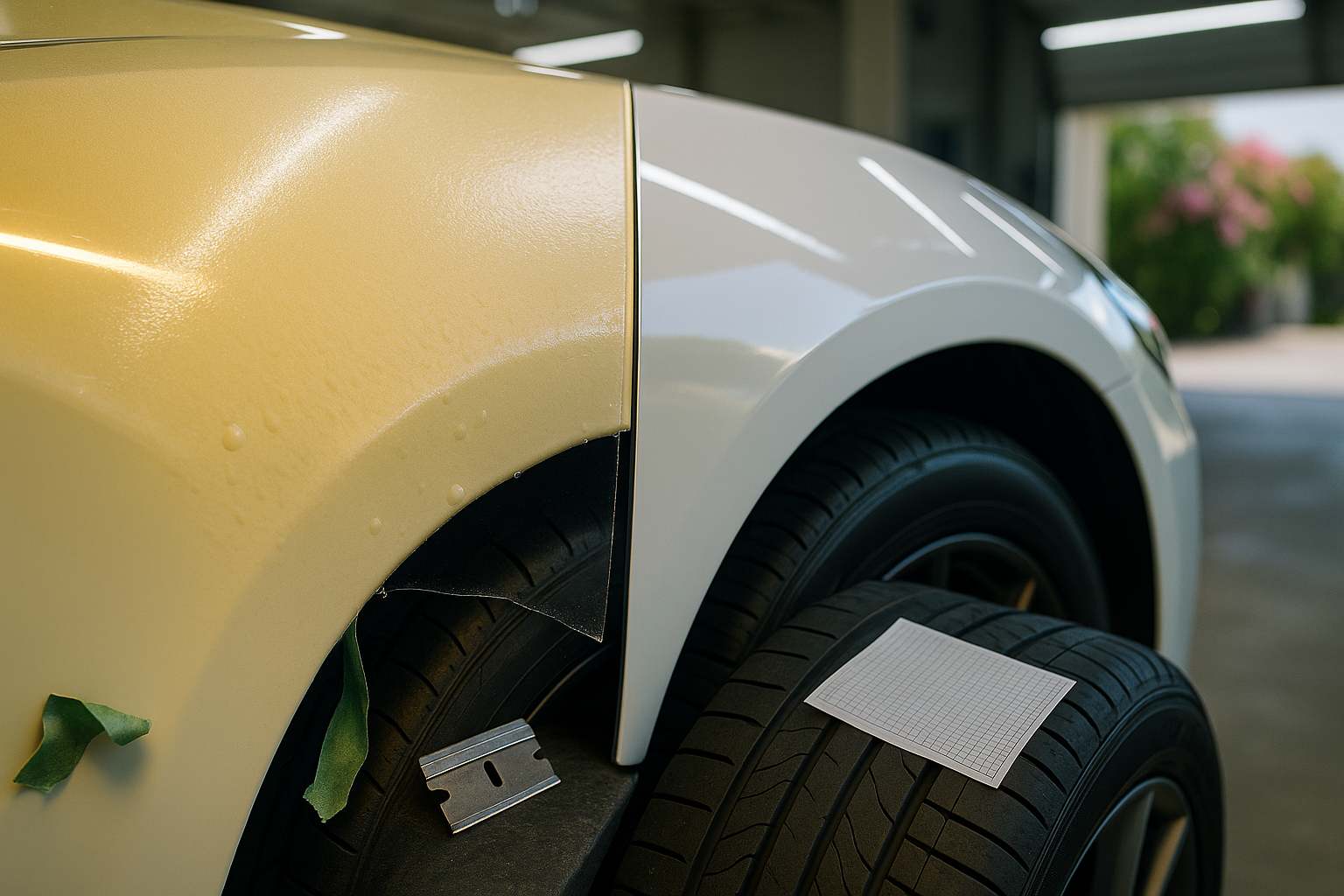
Paint Protection Film (PPF) can be a bulletproof armor for your car, shielding it from stone chips and preserving that showroom shine for years. Or, it can be an expensive, hazy sticker that yellows in six months, peels at the edges, and leaves you with a bigger problem than you started with. The difference comes down to your choices. Making the right choice is crucial, which is why it’s essential to know the common mistakes to avoid when choosing PPF.
This guide serves as your shield against poor investments. We’ll expose the hidden pitfalls, debunk the myths, and arm you with the knowledge to select a PPF that truly protects your car on Lahore’s demanding streets.
Why Getting Your PPF Choice Wrong Hurts So Badly
Choosing the wrong film or installer isn’t just a minor inconvenience; it’s a costly error. You waste your initial investment on a product that fails prematurely. Worse, a low-quality film can damage your factory paint when it’s removed, leading to a repaint risk that tanks your car’s resale value. A bad PPF job costs you money, time, and the pride you have in your vehicle.
Quick Glance: The Top 10 PPF Buying Mistakes
|
Mistake |
Immediate Headache | Long-Term Cost (PKR) |
|
1. Chasing the Lowest Price |
Hazy finish, low clarity (“orange peel”) | 70,000+ (to remove and replace with quality film) |
|
2. Ignoring the Installer’s Skill |
Bubbles, lift lines, razor cuts on paint | 25,000+ (for paint correction after removal) |
| 3. Skipping the Clarity Test | Dull, textured appearance on the paint |
70,000+ (full replacement cost) |
| 4. Falling for Warranty Traps | Warranty voided by unregistered installer |
70,000+ (full replacement cost) |
|
5. Choosing the Wrong Thickness |
Film punctured by motorway debris | 30,000+ (for panel repaint) |
|
6. Getting Inadequate Coverage |
Chips on unprotected areas | 15,000+ (per panel repaint) |
|
7. Using Counterfeit/Unknown Film |
Yellowing, cracking, and adhesive failure |
80,000+ (removal, correction, and replacement) |
| 8. Believing “One-Day Install” Hype | Poor bonding, contamination under the film |
70,000+ (full replacement cost) |
| 9. Neglecting Adhesive Quality | Peeling edges in Lahore’s summer heat |
10,000+ (for patch repairs, if possible) |
| 10. Not Seeing a Self-Heal Demo | Film stays scuffed after minor abrasions |
The film appears worn and old within a year. |
A Deep Dive into the 6 Biggest Mistake Clusters
1. Chasing the Lowest Price, Ignoring Film Grade
The single biggest mistake is assuming all clear films are the same. A bargain-basement price almost always means you’re getting an inferior product, likely old PVC film instead of modern Thermoplastic Polyurethane (TPU). This cheap film lacks clarity, won’t self-heal, and its adhesive will fail, turning yellow and brittle within a year under the Lahore sun.
The Fix: Think of PPF as an investment, not an expense. A premium TPU film from a reputable brand costs more upfront because its chemistry is engineered to resist yellowing, absorb impacts, and self-heal for years.
2. Skipping the Optical Clarity & “Orange Peel” Test
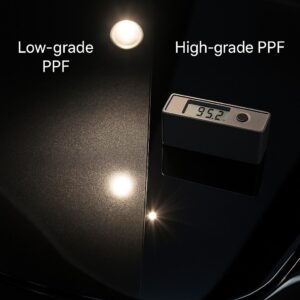
Low-grade films have a noticeable texture that looks like the skin of an orange. When applied to your car, this “orange peel” effect scatters light, dulling the gloss of your paint and making it appear hazy, especially under the bright lights of the MM Alam showroom.
The Fix: Before you commit, ask the installer to apply a small test piece to your car or a black panel. Examine it under a strong light from various angles. A quality film should be virtually invisible, offering glass-clear depth with zero added texture.
3. Overlooking Warranty Fine Print & Installer Registration
A “10-year warranty” sounds great, but it’s often worthless if not backed by the manufacturer and a certified installer. Many warranties only cover specific failures, such as yellowing or cracking, rather than installation errors or damage caused by impact. If your installer isn’t officially registered with the film brand, you have no recourse if they shut down.
The Fix: Always ask: “Is this warranty from you or the manufacturer?” and “Are you a certified installer listed on their official website?” A legitimate professional will proudly display their certification.
4. Choosing the Wrong Thickness for Your Driving
Not all PPF is the same thickness. A standard 8 mil film is excellent for city driving, but if you’re frequently on the motorway facing Kalar Kahar gravel spray, you need more protection. Opting for a thinner film to save a few rupees is a mistake that will show up as a puncture on your first long trip.
The Fix: Match the film to your driving habits. For a daily city driver, a quality 8 mil film is sufficient. For motorway warriors, insist on a heavy-duty 10-mil film for high-impact areas, such as the front bumper.
5. Ignoring Adhesive Technology for Lahore’s Climate
The adhesive is the unsung hero of PPF. Cheap adhesives panic in 45°C parking lots. They can soften and allow the film’s edges to lift, collecting a line of sticky edge grit along the way. The intense humidity near the Ravi River can also interfere with the bonding of low-grade adhesives, causing bubbles and failure.
The Fix: Choose a premium film brand known for its stable, high-performance adhesive. A professional installer will also use a proprietary slip solution that works with the adhesive for a perfect, long-lasting bond.
6. Believing “One-Day Install” Marketing
A proper PPF installation cannot be rushed. The process involves meticulous decontamination, often followed by paint correction, precise application, and a crucial curing time. An installer promising a full front-end job in just a few hours is likely cutting corners—most likely on the paint preparation, which is the foundation for a lasting bond.
The Fix: A quality installation takes time. Expect to leave your car at the studio for at least 2-3 days for a full front-end job. This allows for proper prep, application, and the critical initial 48-hour bond before the car is exposed to the elements.
How to Vet a Film Brand and Installer in 10 Minutes
- Check the Box: Ask to see the original box. Reputable brands have holograms, serial numbers, and professional packaging.
- Visit the Manufacturer’s Official International Website: Check the manufacturer’s official international website for the latest information. Is the installer listed as a certified partner for Pakistan?
- Ask for a Self-Heal Demo: Have them lightly scuff a demo piece with a wire brush and then use a heat gun. The scuffs should disappear on a quality film.
- Inquire About Software: Do they use a plotter and precision software (like DAP) for cutting patterns, or do they cut the film by hand on your car’s paint?
- Assess the Environment: Is the installation bay clean, sealed, and brightly lit? A dusty, open-air shop is a recipe for contamination under the film.
Myths vs. Facts: The PPF Buying Guide
|
The Claim |
The Reality | The Takeaway for You |
|
“Thicker is always better.” |
Not necessarily. A low-quality thick film can have poor clarity. A premium 8-mil film will outperform a cheaper 10-mil film. | The quality of the TPU and top coat matters more than the raw thickness. |
| “All PPF is self-healing.” | False. Only modern TPU films have a self-healing top coat. Cheap PVC or older TPU films do not. |
If it’s a bargain, it probably doesn’t self-heal. Always ask for a demo. |
| “The warranty covers everything.” | No. Warranties cover film defects (such as yellowing, cracking, or blistering), not installation errors or external damage resulting from impacts or improper care. |
Your installer’s workmanship guarantee is just as important as the manufacturer’s warranty. |
DIY Import vs. Certified Local Install
|
Factor |
DIY Import (e.g., from AliExpress) | Certified Local Installer |
|
Film Authenticity |
High risk of being counterfeit. | Guaranteed genuine film. |
|
Installation Skill |
Extremely difficult; requires years of practice. | Professional, flawless result. |
| Tools Required | Requires plotter, squeegees, solutions, etc. |
All-inclusive service. |
| Warranty | None. |
Full manufacturer and installer warranty. |
| Result | Almost always results in bubbles, stretch marks, and failure. |
A perfect, invisible layer of protection. |
FAQs: 10 Costly Mistakes to Avoid When Choosing PPF
1. Is 8 mil thick PPF enough for motorway driving?
For most situations, yes, a high-quality 8 mil film offers excellent protection. However, for maximum peace of mind against the harshest debris on highways, upgrading to a 10 mil film on the front bumper is a wise investment.
2. Do colored or matte PPFs fade faster than clear gloss ones?
Not if you choose a premium brand. Quality colored and matte PPFs are manufactured with the same high-grade, UV-resistant TPU as their clear counterparts. They are engineered to be color-stable and are covered by the same multi-year warranty against fading and discoloration.
3. Will applying a ceramic coating on top of my PPF void the warranty?
Generally, no. In fact, most PPF manufacturers encourage it and even offer their own branded coatings designed for PPF. Applying a ceramic coating enhances the film’s hydrophobicity, making it easier to clean, which can actually help prolong its lifespan. Always confirm with your specific film’s warranty terms.
Conclusion: Choose the Shield, Not the Sticker
Your car is a major investment and a source of pride. Don’t let a poor choice in paint protection turn into a costly regret. By arming yourself with knowledge, questioning the claims, and prioritizing quality over price, you can confidently navigate the market. Skip the traps, choose a true shield from a trusted professional, and drive Lahore’s dusty streets with paint that still looks show-day fresh for years to come.
Don’t gamble with your gloss. Book a free, no-obligation clarity demo at our Gulberg studio. See the difference for yourself in our micro-scratch light tunnel and choose the perfect film with zero regret.
Call or WhatsApp: +92-302-2111-406