

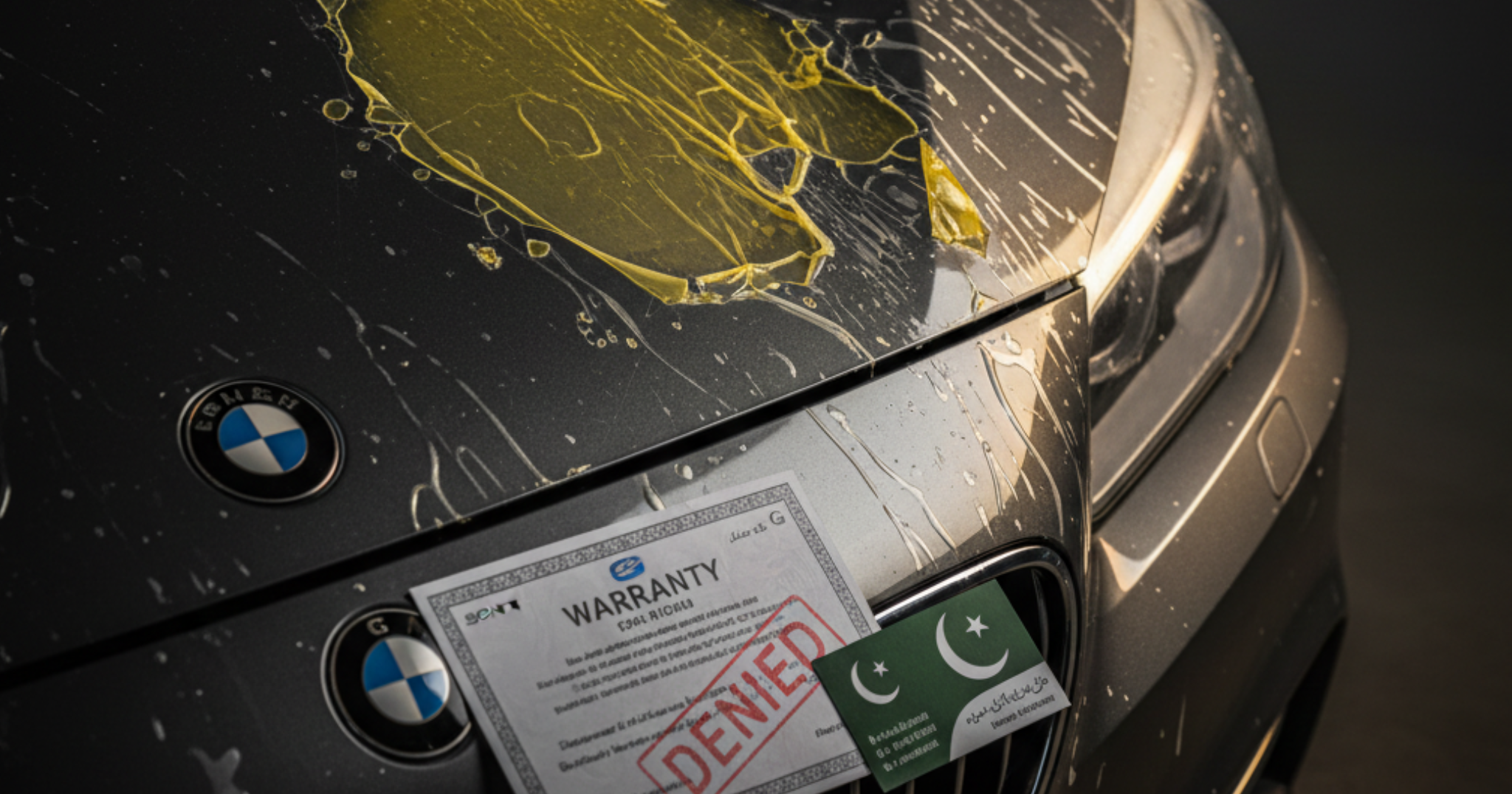
You’re sitting in the installer’s office three years after paying Rs. 450,000 for full-vehicle Paint Protection Film. The edges on your front bumper have lifted, creating gaps where dirt and water are getting underneath. Bubbles have appeared on the hood that weren’t there originally. The film has developed a yellowish tint on the horizontal surfaces. The warranty card you were handed at installation promised “10-year manufacturer warranty against defects” and “lifetime installation warranty.” You’ve brought your car in expecting these PPF warranty claims to be corrected under warranty at no charge.
The installer looks at your car for barely five minutes, snaps a few photos, and comes back shaking his head: “None of this is covered. The edges lifted because you washed it wrong; probably hit them with high-pressure water. The bubbles? That’s from parking in the sun. The yellowing is just normal wear from the environment. Nothing here qualifies for warranty.” You’re standing there confused and angry. These are exactly the problems the film was supposed to prevent; how are they suddenly not warranty issues? You explain that you’ve washed this car the same way you’ve washed every car you’ve ever owned, parked it normally, done nothing unusual. He doesn’t budge: “That’s our assessment. Not covered.”
You leave angry, feeling cheated, and convinced the warranty you were promised is worthless.
This scenario plays out constantly across Pakistan at PPF installation shops. Car owners purchase expensive film protection with warranty coverage prominently featured in the sales pitch, only to discover that actually getting warranty claims honored is nearly impossible. Installers find reasons- often questionable reasons- to deny coverage for film failures that should obviously be covered.
The problem isn’t that warranties are inherently meaningless. Quality PPF products have legitimate manufacturer warranties that provide real protection against defects. Professional installers who stand behind their work will honor warranty claims when genuine installation or product failures occur.
Let me walk you through the reality of PPF warranty claims in Pakistan: what gets approved, what gets denied, how installers manipulate the process, and what you can do to maximize your chances of successful warranty resolution when legitimate film failures occur.
Understanding PPF Warranty Structure
Before discussing what goes wrong with warranty claims, you need to understand how PPF warranty coverage is actually structured. Most customers don’t realize that “warranty” actually refers to multiple separate warranty agreements, each with different coverage and parties responsible.
Manufacturer Product Warranty
This warranty is issued by the film manufacturer, such as XPEL, 3M, or SunTek. It covers defects in the film material itself: manufacturing defects that cause the film to fail prematurely; adhesive failures resulting from improper adhesive formulation; yellowing or discoloration beyond normal aging parameters; cracking or delamination due to material defects; and loss of self-healing properties that should be present throughout the warranty period.
The manufacturer warranty covers only material defects. It doesn’t cover damage from accidents, improper installation, or lack of maintenance. The manufacturer has never touched your vehicle; they only produced the film material. They’re warranting that the material will perform as specified under normal conditions.
Installer Workmanship Warranty
This warranty comes from the shop that actually put the film on your car. It covers screw-ups in how they installed it: edges that lift because they didn’t seal them properly, bubbles from sloppy squeegee work or not activating the adhesive right, dirt or debris they trapped under the film while working, film that looks warped because they stretched it too far, and crooked alignment or obvious seams from careless installation work.
The installer warranty theoretically covers both materials and labor to correct installation defects. If they improperly installed the film and it subsequently fails, they should remove the failed installation and redo the work correctly at no cost to you.
In practice, installer warranties are where most warranty disputes occur. Installers have a strong financial incentive to deny installation defect claims because honoring them requires providing free labor and potentially wasting film material to correct their own mistakes.
Combined Coverage Confusion
When installers sell you PPF, they pitch the warranty as a single package: “10-year warranty on your paint protection film.” You hear that and naturally think it means any problem with the film in the next 10 years gets fixed for free; that’s what a warranty should mean, right?
In reality, the warranty is bifurcated between manufacturer and installer coverage, and each party has an incentive to blame the other when failures occur. The installer claims the problem is a material defect covered by the manufacturer warranty. The manufacturer claims the problem is an installation defect covered by the installer warranty. Neither party takes responsibility, and you’re stuck with failed film and no resolution.
Common PPF Failures and Warranty Coverage
Let me break down the PPF problems that happen all the time and show you what should actually be covered versus the excuses installers throw at you.
Edge Lifting
The film edges start peeling away from your paint, leaving gaps. You’ll see this most on front bumper edges, around mirrors, or near door handles; anywhere wind constantly hits and works against the film’s grip.
What should be covered: If edge lifting occurs within 1-2 years of installation, it’s almost certainly an installation defect. Properly sealed edges on quality film should remain adhered for the film’s entire warranty period under normal driving conditions. The installer failed to seal the edges properly during installation, either by using insufficient heat, applying inadequate pressure, or skipping the edge-sealing steps entirely.
What installers claim: “You blasted the edges with high-pressure water when you washed it; that forced water underneath and broke the adhesive. We don’t cover damage from improper washing.” Or they’ll say: “You parked in too much heat and it made the adhesive go soft and let go. Environmental damage isn’t our problem.”
Reality: Edge lifting within the first few years is installation failure unless you can honestly say you’ve been intentionally aggressive with the edges during washing or the vehicle has been in an accident that affected the edges. Normal washing, normal parking, and normal driving should never cause properly installed edges to lift. Push back against the installer’s denial and demand a correction under the installation warranty.
Bubbles Appearing Post-Installation
Small or large bubbles appear under the film weeks, months, or years after installation in areas that looked perfect initially.
What should be covered: Bubbles that appear after installation (rather than being present from day one) indicate either trapped moisture that prevented proper adhesion or inadequate adhesive activation during installation. Both are installation defects that should be covered under installer warranty. The installer failed to remove all slip solution during installation or didn’t properly activate adhesive through heat and pressure.
What installers claim: “You parked in too much heat and the air trapped in your paint expanded and made bubbles. That’s environmental damage, not our fault.” Or they’ll tell you: “Those bubbles are from your paint releasing gases; it wasn’t cured properly before we installed the film. We can’t warranty problems with your paint that were already there before we started.”
Reality: Modern automotive paint is fully cured before vehicles leave the factory. “Paint outgassing” is rarely the actual cause of bubble formation. Bubbles appearing post-installation are installation failures unless the vehicle was recently repainted immediately before PPF installation.
Film Yellowing or Discoloration
The film develops a yellowish or brown tint, particularly on horizontal surfaces such as hoods and roofs that receive the most UV exposure.
What should be covered: If your film turns yellow during the warranty period and it’s worse than normal aging, that’s a material defect the manufacturer should cover. Good PPF is supposed to handle normal sun exposure without yellowing for the entire warranty period.
What installers claim: “Some yellowing is normal aging and not covered. The yellowing on your car is within acceptable parameters for a film of this age.” Or: “You parked in excessive direct sunlight without shade. Environmental abuse isn’t covered under warranty.”
Reality: This is tricky because some yellowing is indeed normal aging, and determining what constitutes “excessive” yellowing requires comparing your film to age-appropriate samples. However, if your film is noticeably yellowed within 3-5 years on a premium product with a 10-year warranty, that’s likely premature failure. The manufacturer’s UV exposure testing should account for direct sunlight; that’s a normal condition vehicles experience. Get a second opinion from another installer or contact the manufacturer directly.
Cracking or Delamination
The film develops cracks or begins to separate from its backing layer, particularly in curved or stretched areas.
What should be covered: Cracking or delamination is almost always a material defect or installation defect. If the film was overstretched beyond its elastic limits during installation, that’s the installer’s fault. If the film is cracking despite being installed within spec, that’s a material defect. Either way, it should be covered under warranty.
What installers claim: “The cracking is from stone impact damage. Physical damage isn’t covered under warranty.” Or: “You used improper cleaning chemicals that degraded the film. Chemical damage voids warranty coverage.”
Reality: Rocks hitting your car leave chips or gouges; they don’t cause cracks to spread across large sections. If you’re seeing cracks spreading out from stretched areas or curves, that’s either bad installation or faulty material, not rock damage. Regular car wash soap should never crack PPF; if common cleaning chemicals are cracking your film, the material itself is garbage. Push hard for warranty coverage unless you actually used paint thinner or something abrasive on it.
Loss of Self-Healing Properties
Premium PPF products advertise self-healing properties where minor scratches disappear when heat is applied. If this capability stops working within the warranty period, that’s a material defect.
What should be covered: Loss of self-healing properties within the warranty period is a material defect covered by the manufacturer’s warranty. The self-healing topcoat should function throughout the film’s rated lifespan. If it stops working prematurely, the material failed to perform as specified.
What installers claim: “Self-healing only works for very light scratches. The scratches on your film are too deep to self-heal. This isn’t a defect; you’re just expecting more than the product can deliver.” Or: “Self-healing capability diminishes over time. Some reduction is normal and isn’t covered.”
Reality: Self-healing should work for light scratches throughout the warranty period without significant degradation. If your film stopped self-healing within 2-3 years on a 10-year warranty product, that’s premature failure. However, this claim is difficult to prove because installers can always argue your scratches are “too deep” for self-healing. Document self-healing performance regularly with photos and videos so you have evidence of capability loss.
Adhesive Failure
The film loses grip on the paint surface and can be lifted easily, even though edges weren’t previously lifted and no moisture has gotten underneath.
What should be covered: Adhesive failure, where the film stops sticking properly, is either a material defect (a defective adhesive formulation) or an installation defect (inadequate adhesive activation during installation). Both should be covered under warranty.
What installers claim: “The adhesive failed because your paint has contamination or wax residue that prevented proper bonding. Paint preparation is your responsibility; we can’t warranty adhesive failure from contaminated surfaces.”
Reality: Professional installers are responsible for proper paint preparation before installation. If they installed film onto contaminated surfaces without proper prep, that’s their installation failure. If paint was properly prepared and adhesive still failed, that’s a material defect. Either way, warranty should cover the failure. Don’t accept claims that you’re responsible for paint preparation; proper preparation is part of professional installation.
How to Maximize Warranty Claim Success
While installers have tactics to deny claims, you can take steps that dramatically increase your chances of successful warranty resolution.
Document Everything from Installation Day
Immediately after PPF installation, take comprehensive photos and videos of your vehicle in good lighting from all angles. Document film edges, seams, and overall appearance. Note the date and mileage.
Update this documentation every 6 months or after significant events, such as long trips or accidents. Build a visual record of how the film has aged and when problems appeared.
When problems develop, you can show the installer: “Here’s the film on installation day with perfect edges. Here’s the film six months later, still perfect. Here’s the film at 18 months when edge lifting began. This progression clearly shows installation failure developing over time, not damage from a specific incident.”
Documentation is your strongest defense against installer denial tactics. Visual evidence is much harder to dispute than arguments about what might have happened.
Follow Manufacturer Maintenance Guidelines Exactly
Obtain the specific maintenance guidelines for your PPF product; these should be available on the manufacturer’s website or from the installer at the time of installation. Follow these guidelines precisely regarding washing methods, chemical products, and care procedures.
Understand Your Specific Warranty Terms
Get the full warranty paperwork in writing before you hand over any money. That means both the manufacturer’s warranty details and the installer’s own warranty terms. Read through everything carefully and ask about anything that doesn’t make sense.
Specifically clarify what conditions void warranty coverage, what’s considered normal aging versus defective aging, the claim submission process and timeframes. Also know whether labor costs are covered for manufacturer warranty claims, and who determines whether problems are material defects versus installation defects.
Report Problems Immediately
The second you spot any problem with the finish-; edges lifting, bubbles showing up, color changes, whatever- take photos and tell the installer in writing. Email works best because you’ll have proof you reported it.
Your documentation needs: clear photos of the issue from different angles, the exact date you first noticed it, confirmation that you’ve been following their maintenance instructions, and a direct request for them to evaluate and fix it under warranty.
Get Second Opinions
If your installer denies a warranty claim, don’t accept their assessment as final. Get second opinions from other reputable installers or contact the film manufacturer directly.
Other installers may provide honest assessments, even if they tarnish the industry’s reputation by denying warranties. Competitors frustrate professionals who tarnish the industry’s reputation through warranty-denial tactics. They may tell you honestly whether the problem is a legitimate warranty issue or actually falls outside coverage.
The manufacturer may also provide guidance on whether the issue qualifies for warranty coverage. While they’ll ultimately defer to the installer for claim processing, they can tell you whether the problem fits the pattern of material defects they’ve seen with their products.
Most installers will reconsider warranty denials when faced with these escalation tactics because negative publicity and manufacturer pressure create more problems than simply honoring the legitimate claim would have.
What If You’re Stuck with a Bad Warranty Situation
You’ve already had PPF installed, problems have developed, and the installer is refusing to honor warranty coverage. What are your options?
Document the Denial Thoroughly
Having written documentation of the denial and the installer’s stated reasoning is essential for any escalation steps. Without it, disputes become he-said-she-said arguments with no clear record.
Contact the Film Manufacturer
Reach out to the film manufacturer’s customer service and explain the situation: you have their product installed by what you believed was an authorized installer, problems have developed that appear to be warranty-covered failures, and the installer is refusing to honor warranty coverage.
Manufacturers don’t want their products associated with poor customer experiences. They may pressure the installer to honor the warranty, provide replacement film directly, or offer other solutions to resolve the dispute.
Consider Small Claims Legal Action
Small claims courts are designed for disputes like this where the amounts don’t justify hiring attorneys. The filing fees are modest, and the process is relatively straightforward.
Many installers will settle warranty disputes rather than appearing in court because court appearances waste their time and create additional reputational risks even if they win.
Accept the Loss and Move Forward
Sometimes you’ll conclude that fighting the warranty denial costs more in time, energy, and aggravation than just paying for the correction yourself or living with the problem.
Use the experience to inform future decisions; don’t use this installer again, share your experience with others to help prevent similar problems, and apply lessons learned about warranty documentation and installer selection to future automotive purchases.
Choosing Installers Based on Warranty Reputation
The best way to handle warranty problems is preventing them by choosing installers with strong reputations for honoring warranty commitments.
Research Customer Experiences
Before you pick an installer, dig into how they actually handle warranty claims. Look for reviews where customers talk about warranty issues; did the shop fix things fairly, or did they jerk people around with excuses?
Ask About Their Warranty Philosophy
Installers who view warranties as customer protection will discuss claims matter-of-factly and explain how they work to resolve legitimate issues fairly. Installers who view warranties adversarially will be defensive or dismissive about warranty topics.
Prioritize Established Reputation Over Price
Installers with strong reputations and extensive positive customer feedback charge more than newer or less reputable competitors. This price difference partly reflects their commitment to standing behind their work; honoring warranty claims costs money through free labor and replacement materials.
Pay more upfront for an installer with proven warranty integrity. The premium is insurance against future warranty disputes.
Verify Manufacturer Certification
Check manufacturer websites for authorized installer lists. If an installer claims certification but isn’t on the official list, they’re not actually certified, regardless of the certificates they display in their shop.
Get Everything in Writing Before Installation
Before committing to installation, obtain complete written documentation of all warranty terms from both the manufacturer and the installer. Review these documents carefully and ask questions about anything unclear.
FAQs: PPF Warranty Claims
If my installer goes out of business during my warranty period, does the manufacturer’s warranty still cover me, or am I completely out of luck?
Manufacturer warranties remain valid even if the installer who applied the film closes their business, but claiming a manufacturer warranty without an active installer relationship is significantly more complicated. The manufacturer warranty covers material defects in the film itself regardless of installer status. Still, you’ll need to work directly with the manufacturer to submit claims; start by contacting the manufacturer’s customer service with photos of the problem, your installation date, and any documentation you have about the film product used.
The manufacturer may direct you to another authorized installer in your area who can evaluate the problem and submit warranty claims on your behalf. However, this installer may charge evaluation or diagnostic fees since they have no prior relationship with you. The complication is that manufacturer warranties typically don’t cover labor costs to remove failed film and install replacement material; they only provide replacement film at no charge.
Can installers legally include warranty terms that require me to return every few months for paid maintenance or inspections, and what happens if I can’t comply with these requirements because I live far away or have scheduling conflicts?
Yes, installers can legally tie their warranty to mandatory maintenance visits, just as car companies require service schedules. But the requirements need to make sense and actually protect the film. If distance or your schedule makes their appointments impossible, keep your own records: document how you wash and care for the film using the manufacturer’s guidelines, snap regular photos, and note that you tried to meet their terms. When problems arise, and they deny your claim for missed visits, you can prove you maintained things properly without their inspections. Here’s what really matters: would their maintenance visits have prevented the problem anyway? If your film’s yellowing or bubbling, an inspection wouldn’t have stopped that. Before you commit to installation, figure out whether their maintenance schedule works for your life; if it doesn’t, negotiate a different schedule or find an installer who won’t lock you into theirs.
What specific evidence should I collect and preserve if I suspect my installer will deny future warranty claims, and how should I organize this documentation to maximize its legal effectiveness?
Start building your evidence file the day you get your car back from installation and keep it going throughout the warranty period. This documentation serves as your defense if the installer later tries to deny your claims. Right after installation, take clear photos and videos of your entire car from every angle in good outdoor lighting, making sure you capture film edges, seams, how everything looks overall, and any small imperfections that are already there.
Date-stamp these files, save them to your phone, and back them up to the cloud. Start a maintenance log where you record every time you wash the car: the date, how you washed it, which products you used, and anything you noticed about the film’s condition. Take photos of the actual soap bottles and cleaning products you’re using.
Every three to six months, do another complete photo session of your car and write notes on any changes you’re seeing in the film; describe them in detail and, if you can, measure them. This creates a timeline that shows exactly when problems began appearing, rather than being there from day one.
Final Perspective on PPF Warranties
Quality installers exist who stand behind their work and honor warranty obligations fairly. These professionals understand that warranty claims are occasional costs of doing business, not attacks on their profitability. They view warranty coverage as a relationship-building opportunity rather than an adversarial dispute; correcting problems quickly maintains customer satisfaction and generates referrals.
The installer-customer relationship shouldn’t be adversarial. Both parties should want the same outcome: a film that effectively protects your vehicle throughout its warranty period.